Key Takeaways
- Prolozone therapy supports ligament healing and joint stability, addressing chronic pain causes that traditional treatments often overlook.
- Ligament weakness can lead to joint instability, abnormal stress, inflammation, and chronic pain; Prolozone therapy rejuvenates ligament function.
- The therapy combines medical-grade ozone with nutrients to stimulate repair, improve oxygen delivery, and enhance connective tissue strength.
- Common conditions benefiting from Prolozone therapy include chronic lower back pain, knee issues, shoulder instability, and ankle sprains.
- Patients typically experience gradual improvement with recommended multiple sessions, allowing for long-lasting relief and better structural support.
How Prolozone® Therapy Supports Ligament Healing and Joint Stability
When people think about chronic joint pain, they often assume cartilage damage is the primary cause. However, one of the most overlooked drivers of persistent pain is ligament weakness and joint instability. Prolozone® Therapy is specifically designed to support ligament healing and restore joint stability — addressing a root cause that most conventional treatments miss entirely.
The Role of Ligaments in Chronic Pain
Ligaments are dense bands of connective tissue that connect bone to bone. Their primary function is to stabilize joints and guide proper movement. When ligaments become overstretched, weakened, or injured, joints may shift slightly out of alignment — even if that shift is subtle. As a result, abnormal stress, inflammation, and chronic pain develop over time.
Ligaments do not have a robust blood supply. As a result, they heal slowly after injury. Even minor sprains or repetitive strain injuries can leave them weakened for extended periods. When ligaments fail to provide adequate stability, several things occur: joint wear accelerates, muscles overcompensate, nerves become irritated, inflammation persists, and range of motion decreases.
In many cases, pain continues not because the joint surface is severely damaged, but because the supporting structures are compromised. This is particularly common in chronic lower back pain, recurrent ankle sprains, shoulder instability, knee pain without major cartilage loss, and neck pain following whiplash. Traditional treatments often focus on reducing inflammation; however, they do not restore structural support.
Why Joint Stability Matters
Think of a joint like a door hinge. If the hinge becomes loose, the door no longer moves smoothly. Over time, the frame and surrounding structure begin to wear unevenly. Similarly, joint instability accelerates degeneration. Muscles tighten to compensate. Nerves become irritated. Cartilage experiences abnormal stress.
Improving stability reduces strain on surrounding tissues and helps break the cycle of chronic pain. That said, most standard pain treatments — cortisone shots, oral anti-inflammatories, rest — address the symptom of inflammation without restoring the structural support the joint needs to function properly. This is why so many patients experience temporary relief followed by recurring pain.
How Prolozone® Therapy Supports Ligament Function
Prolozone® Therapy combines medical-grade ozone with a nutrient solution designed to stimulate local healing responses. Dr. Wiener delivers treatment in two stages.
First, a solution containing vitamins, minerals, and anti-inflammatory compounds is injected into the affected area. This primes the tissue for the regenerative phase by reducing acute irritation and providing the raw materials needed for repair. Second, medical-grade ozone is introduced to improve oxygen utilization and stimulate cellular repair at the injury site.
Oxygen plays a critical role in tissue metabolism and healing. By enhancing oxygen delivery precisely where the ligament or joint capsule is damaged, Prolozone® Therapy promotes improved local circulation, supports collagen production, reduces inflammatory signaling, and enhances connective tissue strength. As a result, patients typically experience progressive, cumulative improvement rather than the temporary relief that cortisone provides.
Common Areas Where Ligament Support Makes the Difference
Spine — Neck and Lower Back
Spinal ligaments maintain alignment between vertebrae. When they become lax, small movements irritate surrounding joints and nerve roots, generating chronic pain that feels muscular but is actually structural. By supporting these ligaments, Prolozone® Therapy can improve spinal stability and reduce pain associated with degenerative changes that haven’t responded to physical therapy or injections.
Knees
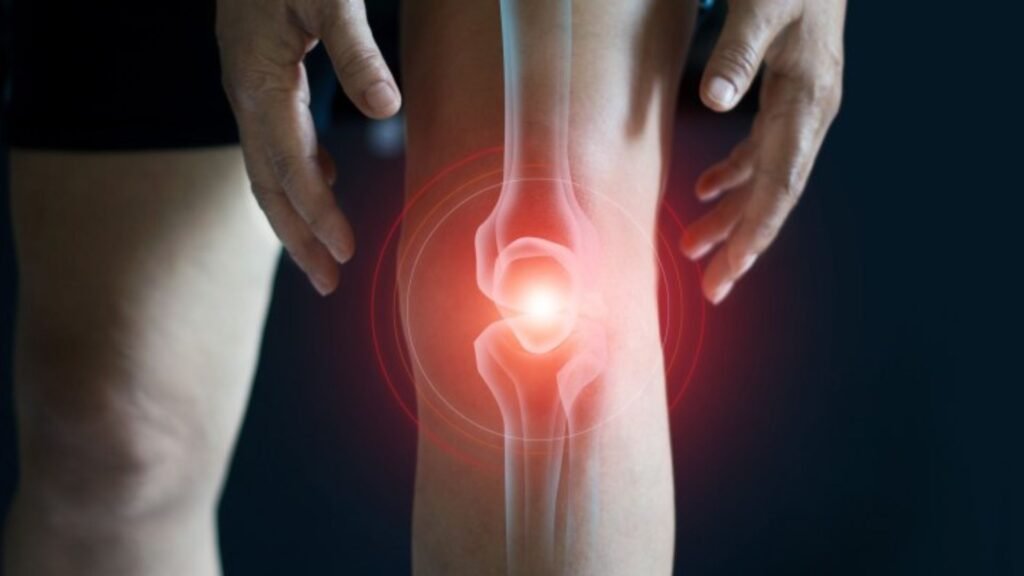
Knee pain is frequently attributed solely to cartilage wear. However, ligament weakness around the joint causes uneven tracking and pressure, which accelerates cartilage damage and generates ongoing pain, even when the cartilage loss itself is mild. Strengthening the connective tissue supporting the knee can improve joint mechanics and decrease stress on cartilage surfaces — which is why many patients with moderate knee osteoarthritis respond well to Prolozone® even when they’ve been told replacement is their only option.
Shoulders
The shoulder is the most mobile joint in the body and depends heavily on ligament integrity to function without pain. Chronic instability leads to rotator cuff irritation and ongoing discomfort that doesn’t fully resolve with physical therapy. Supporting ligament integrity helps restore smoother, more stable movement patterns and reduces the impingement that drives most chronic shoulder pain.
Ankles
Repeated ankle sprains frequently result in long-term ligament laxity. Even minor ongoing instability increases the risk of future injury and generates chronic discomfort during activity. Because the ankle ligaments have a poor blood supply, they often don’t fully heal after sprains, which is precisely the scenario Prolozone® Therapy is designed to address.
Prolozone® Therapy vs. Symptom Suppression
Most conventional pain treatments are designed to temporarily reduce inflammation. While this provides meaningful short-term relief, it does not improve structural integrity. In contrast, Prolozone® Therapy targets the connective tissue damage that is generating the inflammatory state in the first place.
This doesn’t mean Prolozone® replaces physical therapy — in fact, the two work well together. Physical therapy addresses muscle strength and movement patterns. Prolozone® addresses ligament integrity and the tissue oxygen environment, allowing those improvements to hold. When both are used appropriately, results are often significantly better than either approach alone.
What Patients Can Expect
Dr. Wiener performs treatment entirely in the office, and each session typically takes 10 to 20 minutes. Because the procedure is non-surgical, downtime is minimal — most patients return to normal activity the same day. Some mild soreness at the injection site is normal and typically resolves within 24 to 48 hours.
Improvement is gradual as tissues respond over time. Dr. Wiener typically recommends a series of three to six sessions, depending on the condition and its severity, with progressive improvement between each one. Many patients notice that the stability and comfort they experience between sessions increase as treatment progresses.
Who May Be a Candidate?
Patients who tend to benefit most from a ligament-focused regenerative approach include those with chronic joint instability, recurring sprains, persistent back or neck pain that hasn’t responded to other treatment, and anyone who wants to explore non-surgical options before committing to an invasive procedure. That said, not all pain originates from ligament weakness — accurate diagnosis is essential.
Dr. Wiener uses imaging review, physical examination, and your full clinical history to guide treatment decisions. In cases of severe structural damage or complete tendon rupture, surgical consultation may still be necessary. Prolozone® Therapy is most effective when carefully applied to the right patient.
Schedule a Consultation in Bloomfield Hills
Joint stability is a critical — and frequently overlooked — component of chronic pain management. By focusing on connective tissue support and oxygen metabolism, Prolozone® Therapy offers a regenerative path toward improved structural integrity rather than simply suppressing inflammation.
If you’re exploring non-surgical options for chronic joint or spine pain in Oakland County, Dr. Steven Wiener’s practice at 359 Enterprise Ct in Bloomfield Hills, MI is worth a call. He serves patients from Troy, West Bloomfield, Rochester Hills, Birmingham, Farmington Hills, and throughout the region. Call (248) 291-7223 to schedule a consultation.