Degenerative disc disease is one of the most common diagnoses given to patients with chronic back or neck pain — and one of the most commonly cited reasons for recommending spinal surgery. However, for the majority of patients with degenerative disc disease, surgery is not the only option. In Michigan, a growing number of patients are finding meaningful, lasting relief through non-surgical Prolozone® Therapy at Dr. Steven Wiener’s Bloomfield Hills practice.
What Degenerative Disc Disease Actually Is
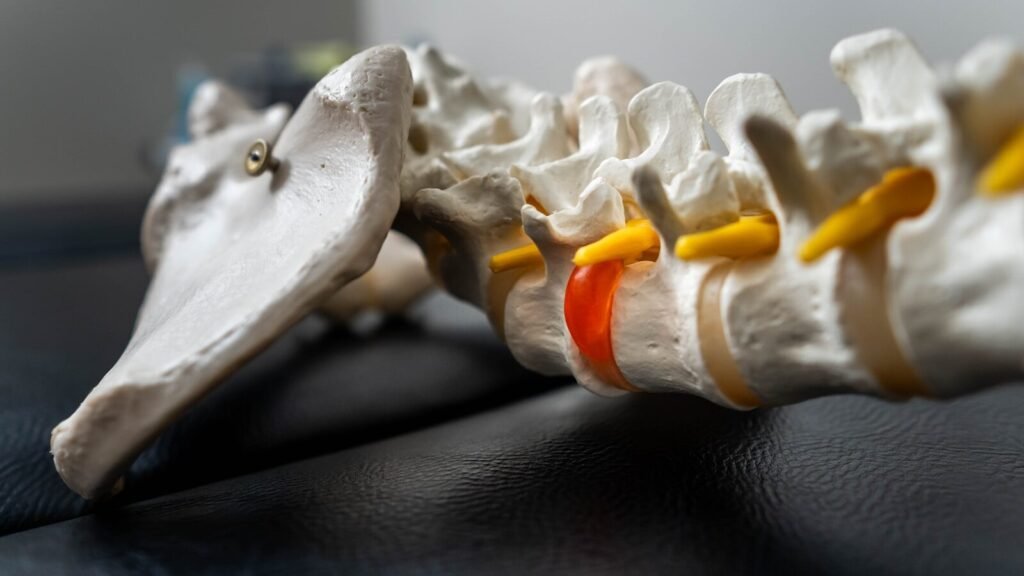
The intervertebral discs — the cushioning structures between each vertebra — are made of a tough outer layer surrounding a gel-like center. As we age, these discs lose water content, become less pliable, and may begin to crack, bulge, or collapse. This degeneration reduces the cushioning between vertebrae, can narrow the spaces through which nerve roots exit the spine, and generates chronic inflammation in the surrounding tissue.
The result is pain — local back or neck pain, referred pain into the legs or arms, and in some cases, nerve symptoms like tingling, numbness, or weakness. Because the pain can be severe and the imaging findings dramatic, surgery is often presented as the logical next step. However, research consistently shows that the degree of degeneration visible on imaging does not reliably predict the severity of symptoms — and surgical outcomes for degenerative disc disease are more variable than for other spinal conditions.
Why Standard Treatments Often Fall Short
The challenge with degenerative disc disease is that the disc and surrounding tissue have notoriously poor blood supply. This is why discs degenerate in the first place — they receive insufficient oxygen and nutrients to maintain their structural integrity over time. It’s also why standard treatments that don’t address this fundamental biological problem tend to provide only temporary relief.
Anti-inflammatory medications reduce the pain signal but don’t stop the progression of degeneration. Epidural steroid injections reduce inflammation in the epidural space, providing meaningful short-term relief, but the disc environment doesn’t change and the pain returns. Physical therapy builds supporting musculature, which can reduce loading on the disc, but can’t restore disc integrity or reverse the inflammatory state driving the pain.
Surgery — whether discectomy, fusion, or artificial disc replacement — addresses mechanical problems but not the surrounding tissue damage and chronic inflammation that often persist post-operatively. This is one reason why a significant percentage of patients continue to experience pain after technically successful spinal surgery.
How Prolozone® Therapy Addresses Degenerative Disc Disease
Prolozone® Therapy targets the fundamental biological problem that drives degenerative disc pain: oxygen-deprived, chronically inflamed tissue that can’t complete its own repair process. Medical-grade ozone is injected precisely into and around the affected disc and surrounding spinal structures, dramatically increasing oxygen utilization at the cellular level.
This restores the conditions the tissue needs to reduce its chronic inflammatory state and support structural stabilization. The anti-inflammatory nutrient formula simultaneously delivers targeted compounds that address acute irritation and provide the raw materials for tissue repair. As a result, patients typically experience progressive reduction in pain and improved function across a series of sessions as the disc environment and surrounding structures improve.
Importantly, Prolozone® doesn’t claim to regrow a degenerated disc from scratch. What it achieves is a meaningful reduction in the inflammatory state and improvement in the surrounding tissue that is generating most of the pain — which is often enough to allow patients to live comfortably and avoid surgery.
Who Is the Best Candidate?
Patients with degenerative disc disease who tend to benefit most from Prolozone® Therapy include those with mild to moderate degeneration where significant disc height remains, patients whose primary symptom is pain rather than significant neurological deficit, those who have tried physical therapy and steroid injections without lasting relief, and patients who want to avoid surgery or are not yet surgical candidates.
Patients with severe neurological compromise — progressive weakness, loss of bladder or bowel control, or severe nerve compression — may require surgical evaluation regardless of other options. Dr. Wiener will tell you honestly whether Prolozone® is appropriate for your specific imaging findings and symptoms.
Serving Disc Pain Patients Across Oakland County
Dr. Wiener’s practice is located at 359 Enterprise Ct in Bloomfield Hills, MI. He regularly sees patients with degenerative disc disease from Troy, West Bloomfield, Rochester Hills, Birmingham, Farmington Hills, and throughout Oakland County who have been told surgery is their next step. Call (248) 291-7223 to schedule a consultation and get an honest assessment of your options.
Key Takeaways
- Degenerative disc disease is a common reason for chronic back or neck pain, but surgery is not the only option.
- Degeneration occurs due to aging and poor blood supply, leading to pain and inflammation.
- Standard treatments like medications and physical therapy provide temporary relief but do not address the root causes.
- Prolozone® Therapy injects medical-grade ozone to improve oxygen levels and reduce inflammation, aiding tissue repair.
- Best candidates for Prolozone® Therapy include patients with mild to moderate degeneration who want to avoid surgery.